Showing posts with label Acores. Show all posts

Wednesday, January 14, 2009

Portugal Vacations: Flores Azores

Flores Azores

Last week on Portugal Vacations I told you a little about Corvo (Crow Island), the northernmost island in the Azoreas Archipelago. Today, I would like to tell you about Corvo's sister island Flores.

Flores is located on the north west, Flores is another Portuguese Island worth the travel and has a total land area of approximately 143 km², and like the rest of the Azorean islands is volcanic in origin. Many interesting rock formations can be seen on this picturesque island, such as the interesting threads created from petrified basalt. The highest point on the island is Morro Alto at about 3000 feet.

Flores was discovered in 1450 by Portuguese Explorer Diogo de Teive and remained uninhabited for about 20 years, primarily due to the fact that the Portuguese were discovering new Lands almost every year and there was just not enough time to administer each and every land mass. Like many of the other central islands, Flores was primarily established and inhabited by Northern Continental Portuguese. Today, there are approximately 4000 permanent residents on the island who reside in the municipalities of Santa Cruz or Lajes, who will be welcome you warmly on your Portuguese Vacation.

Flores is the Portuguese word for Flowers. It was named thus due to the large number of flowers, hydrangeas specifically, that grow wild and plentiful in the summer months. Many who visit Flores consider it the most beautiful of all the Azores islands, and its hard to argue. With its 7 Crater Lakes and many waterfalls, Flores is a daydreamer's paradise. Along with the large number of Lakes and waterfalls, Flores volcanic history has created the magnificent cavern called Enxareus Grotto, which is approximately 164 feet long and 82 feet wide.

Whether you're looking to day-dream your days away listening to the sounds of a nearby waterfall or sailing into the blue Atlantic Ocean, Flores is a recommended Island Getaway that will keep beckoning you back to simpler days and it makes a great Portugal Vacations.

Sunday, January 11, 2009

Portugal Vacations: Corvo Azores

Corvo Azores

Last week on Portugal vacations I told you a little about the breathtaking island of Faial. This week I'll tell you a little about Corvo Island (Crow Island in English).

Often, people who travel to Portugal and the Azores specifically, usually forgo a trip to Corvo. Due to its relative isolation to the other Azores islands and its very small population, Corvo can often seem to be a very far away place to visit. But for those of you who are seious about travel, Corvo should not be missed. Don't let its small size fool you, this island is a great location for enjoying nature at its fullest.

Corvo is the smallest and northernmost Island in the Azores. Along with it's sister island Flores, it is part of the western Azores islands. Corvo is approximately 6.5 km long and 4 km wide, with a total land area of approximately 17 km2 As well as being the smallest island in land area, Corvo has also got the smallest population, with approximately 460 inhabitants who mostly reside in Vila Nova do Corvo.

Most of the residents of Corvo work in Agriculture and/or fishing. Due to its isolation, the people of Corvo have learned to do things for themselves and are very autonomous and self-sufficient, the extended family is very important.

The prominent feature of Corvo is the volcanic crater of Monte Grosso which has an approximate perimeter of 4 km and a depth of 300 m. Like many of the other Azores islands, these volcanic craters create a very unique and stunning vistas that are well worth the visit. The volcano is considered dormant.

Due to it's small size and relative isolation, Corvo does not have any hotels so day trip is probably the best option. There is a small campground and guesthouse on the island. You can get to Corvo by small airplane which services the islands a few days per week, or by boat from the island of Flores.

Corvo is indeed a walk off the beaten path, and can be very rewarding for those who take the time to appreciate this small island it is a great place to go on your Portugal Travels.

I hope you enjoyed this brief overview of Corvo. Please come back next week to learn more about the great places of Portugal On Portugal Vacations.

Sunday, January 4, 2009

Portugal Vacations: Faial Azores

Faial Azores

On last weeks post of Portugal Vacations I told you about Graciosa, one of the beautiful islands of the Central Azorean Archipelago. In today's post I will tell you about Faial, another of the central Azorean islands.

Originally called Ilha da Ventura (Venture Island) Faial was renamed due to the large number of Myrica faya trees that exist on the island. Some still refer to Faial as the Ilha Azul (the "Blue Island"), due to the large quantity of Hydrangeas that grow there in the summer.

Faial is a Pentagonal shaped island with a land area of 173 km². It is very hilly, with 1,043 meters high peak and with a 2 km wide inner crater that is approximately 500 meters in depth. Faial's closest neighbor is the island of Pico which can be seen at any time of year. On clear days, the Island of Sao Jorge is also visible. Faial has had volcanic activity as recently as 1958 at which time a large portion of the population fled to the other Azores islands, Continental Portugal, Brazil or the United States.

Discovered in 1427, Faial was originally inhabited by Northern Continental Portuguese who migrated to it through the island of Terceira. As time passed, Flemish migrants also migrated to Faial and integrated with the local Portuguese population.

The most important city in Faial is Horta which is located on the southeast part of the island. Horta has always been an important stopover for Portuguese explorers and merchants during Portugal's long Maritime history. The Horta fort, which today is a Pousada, played a very important role in the defense of the Azores, which over the years has experienced raids and attacks by French, Spanish and the English.

Today, Faial has a population of approximately 15,000 people, many of whom work in Tourism, agriculture or fishing. Commercial whaling played a large role in the islands economy in the earlier part of the 20th century, but vanished completely after it was banned by the Portuguese state in the early 1980's.

The island is still considered an important stop-over for small commercial fleets and private yachts sailing from the Americas and Europe.

Faial is an excellent island for boaters who enjoy a day in the open ocean, or island hopping. It is also an excellent place for whale watching. For those of you who love hiking, then Faial is also a perfect location due to it's steep hills and marvelous vistas. Make Faial one of your stop-overs on your next Portugal Vacation.


Source of all images:

isabelmar: Flickr

Sunday, December 28, 2008

Portugal Vacations: Graciosa Azores

Graciosa Azores

On the last post of Portugal Vacations I told you about Sao Jorge Azores, a gorgeous island in the central Azores archipelago. Today I'll tell you a little about Graciosa, another of the Central Azores islands and a pristine Portuguese Gem.

Discovered 1n 1450 by Portuguese explorers, Graciosa was first settled by Vasco Gil Sodré and his family. Vasco left his home in Coimbra (Northern Portugal) searching for a for his riches in the Azores.

Today, most of the 4700 residents on this island are descendants of settlers from northern Portugal and France. This absolutely stunning oval shaped island is the northernmost island of the central group. The island has a total area of approximately 61 km² with a length of 10 km and width of only 7 km making it one of the smaller islands. The majority of the island's population reside in the Santa Cruz municipality.


Graciosa means (Graceful in English) and it lives up to its name. Like all the other islands, it is a green paradise, with soft rolling hills and tranquil gardens. Graciosa is the flattest of all Azorean islands, but also one of the most intriguing. Hidden in the islands Caldeira is the "Furna do Enxofre" (Sulphur Cavern), a breathtaking cavern rising up to 80 meters high and concealing a magnificent underground lake. Since Graciosa is one large dormant volcano, hot springs and thermal baths are a specialty on the island and a great way to rejuvenate. See image to the left of the thermal spa.

Graciosa is a must see on your Azores Travel and a perfect way to enjoy your Portugal Vacation.

Sunday, December 21, 2008

Portugal Vacations: Sao Jorge Azores


Sao Jorge Azores

Last week I told you about the island of terceira. Sao
Jorge (St. George in English) is a knife shaped island in the center of the Azores, approximately 17 km northeast of the island of Pico. Sao Jorge is approximately 56 kilometers in length and only 8 kilometers wide with a total area of about 248 sq, making it the fourth largest of the Azores islands. It is a sparsely populated island with approximately 10 thousand inhabitants. In the 15th Century, many Flemish families migrated to the island of Sao Jorge and integrated with the existing Portuguese population at the time.

Most of the island is above 300m and is noted for it's sheer cliff walls to the North. The average height of the central ridges is approximately 700m and many of the coastal cliffs are as high as 400m. The vast majority of the Sao Jorge population reside on the south part of the island. Sao Jorge is a great place for those who are looking to escape from it all, it is indeed a a place where tourism has yet to form. Many of the residents here still live a very rural existence with agriculture being the main economic engine. Possibly the most famous of all things coming from the island of Sao Jorge is it's famous cheese. St. Jorge cheese is famous for its full bodied spicy flavor and should not be missed on your next travels through the Azores.

I hope you enjoyed this brief overview of the Island of Sao Jorge Azores. Please come back again as we explore the other islands of the Azores on Portugal Vacations.

Sunday, December 14, 2008

The Azores: Island Of Terceira


Terceira Azores


Last week on Portugal Vacations I told you about the awe inspiring Island of Pico, the second largest island in the Azores, and possibly the most stunning. Today I will tell you a little about the Island of Terceira, Azores.

The Island of Terceira was thus named due to it being the third island to be discovered in the Azores by Portuguese explorers (The name ‘Terceira’ means 'Third' in English). As mentioned before, Sao Miguel and Pico are the largest and second largest of the Azores Islands. Terceira is also the third largest island so it is fitting that it would get the name Terceira. Terceira is approximately 29 km long and up to 18 km wide with a total area of approximately 385 km2. The closest island to Terceira is São Jorge (St. George in English) 55 km to the west.

Like the other islands of the Azores, Terceira is a beautiful green paradise in the middle of the Atlantic, but it can also be one of the noisiest depending on which part of the island you reside due to the incoming European and North American Military aircraft at the Portuguese Airbase, Lajes. The Lajes airbase was initially constructed in 1934 by Portuguese Fascist Dictator Salazar's Regime and has served as a refueling, Reconnaissance, patrolling, and support base for almost a century. Over the years, many upgrades have been made to the base, along with American Military who have used a portion of the base under lease by the Portuguese State since the WWII.

Terceira is also home to the oldest established city in the Azores, called Angra do Heroismo (Meaning 'Cove Of Heroism' or 'Heroism Cove' in English), first established in 1478. Angra do Heroismo got its name due to the bravery of the people of the island who battled invading armies and pirates from Europe and the New World. It is today on the UNESCO Heritage List. You can see the city on the image at the top of the page.

Terceira is also the bullfighting capital of the Azores, where each year centuries old traditions of running with the bulls is still practiced. Unlike the running with the bulls held in Spain, the ones in Terceira are held in an open square, making it less dramatic than the Spanish one, and the bulls are tethered to a rope to prevent them from roaming free through the city.

Hope you liked this short overview of the Island of Terceira. In the next few posts of Portugal Vacations, I will tell you more about the other islands of the Azores.

Sunday, December 7, 2008

Portugal Vacations: Pico Azores

Pico Island Azores

In the last post of Portugal Vacations I told you about Sao Miguel, the administrative capital of the Azores. On this post I will tell you a little about Pico, possibly the most fascinating of all the Islands of the Azores.

The island of Pico is 42 km long and 15 km at its widest point, with a combined area of 447 km², it is in fact the second largest island in the Azorean Archipelago. The name Pico is a Portuguese word for peak, which is obvious when you look at the island and it's remarkable volcanic cone rising to 2351 m. The volcanic cone is officially inactive, with the last major eruption occurring back in the 1700's.

The largest town in Pico is Madelena which is located on the western side of the island. There are just over 15,000 inhabitants residing on the island of Pico.

Up until the early 1980's, Pico had a very active commercial whaling industry, that at the time was the major economic engine on the island. Today, ironically, Pico is the place to go for whale watching, with many sightseeing expeditions taking tourists on breathtaking expeditions.

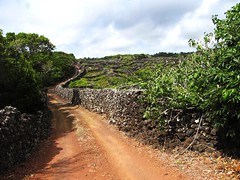
Another interesting part of the Pico economy is its viticulture. Built over many centuries, Pico's lattice work of protective stone encapsulations help protect the native 'Verdelho' grape from the harsh weather and conditions of Pico winters. Recently added to the UNESCO World Heritage, this wine region of Pico is a marvel to behold, as it is a green landscape amidst jagged volcanic rock in a virtually treeless environment offer spectacular vistas.


I hope you enjoyed this brief overview of the Island of Pico, Acores. Come back for more information on the other islands of the Azores on Portugal Vacations.

Source of First Image:
Source: File produced by Christer Johansson

Source of Second Image:
flickr

Sunday, November 30, 2008

Portugal Vacations: São Miguel Azores

The Island Of São Miguel

I'll start up my description of the 9 Islands of the Azores with São Miguel.


São Miguel (St. Michael in English) is both the capital of the Azores and the largest of the 9 Azorean islands, roughly 67 k in length and 15 km wide. On the east side of the island you will find the highest mountain summit, Pico de Vara, which is a height of 1105 m. On the western side of the island is where you will find the picturesque Sete Cidades, ( Meaning 'Seven Cities' in English) with a summit of 874 m. In the Centre of the island the highest peak is Pico da Barrossa at 949 m, which includes the nature reserve Lagoa do Fogo(Meaning "Fire Lagoon" in English).

Sete Cidades is a must see for anyone visiting São Miguel. With its breathtaking panoramic views and luscious green hills, it is a place of inspiring beauty. Sete Cidades main attraction are the two lagoons, affectionately known as the Green Lagoon and the Blue Lagoon due to the different color of water in each lagoon. You can see the two lagoons in the image to the lower left.


There is a local legend regarding how the two lagoons were created. It is a tale of a blue eyed Princess and a green eyed Shepard boy and it goes something like this:

Early one summers day, a blue-eyed princess was playing on the green rolling hills when, by chance, she met a green-eyed Shepard boy. That summer, their friendship grew until they were deeply in love.

Rumor spread that the Princess was spending all her time with a Shepard boy, until it eventually reached the ear of her father, the King. Upon hearing of the princess and the Shepard boy, the king became furious and confronted his daughter. He scolded her and reminded her status as a princess was being tarnished by her love for the boy.

The king forbid the princess from seeing the Shepard boy again and devised a plan to send the princess far away from that place. Upon hearing the king's horrible plans, the Princess ran away, seeking the boy.

When the the Princess found the Shepard boy, she told him that she was running away from the king and wanted to spend the rest of her life with him. The Shepard boy realized that the Princess' plan were folly, and that the king would never let them be together. The Shepard boy, fighting back tears, convinced the princess that it was best that she do as the King demanded. Unable to bare the pain that his own words brought him, the Shepard boy ran away from the Princess. In absolute horror, the Princess sat at the top of the highest ridge and wept. The tears from her blue eyes fell deep into the valley below, creating a blue lagoon.

After some time, the Shepard boy realized the mistake he had made and ran back to where he left the princess, but she was nowhere to be found. Heart-broken he sat on that same ridge and wept, his tears falling into the valley below creating a Green Lagoon. To this day, when it rains and if you listen closely, you can still hear them weep.

There are many variations to the tale, but the above is my favorite.

On the east side of the Sao Miguel, you will also find the hot springs and mineral springs of Furnas, a very popular place for locals and tourists alike. Among the many natural springs abundant there, you can also partake in mud baths which are reputed to offer skin and toxin cleansing properties. Furnas is also the place where a peculiar island custom of underground cooking is popular. Locals and tourists bring bring along their own pots from home, pre-filled with an assortment of meats and vegetables. On-site workers will then attach the pot to a rope and slowly drop it into deep man-made holes. Underground, the volcanic heat will gently cook the contents of the pots. When deciding to get involved in this Island custom, it's important to mark the place where your your pot is buried, as it's not unusual for people to mistakenly pull up the wrong pots.


Sao Miguel's capital, Ponta Delgada is the administration capital of the Azores. It is the largest city in the Azores, but still relatively small when compared to cities in North America or Asia. It's recommended that you park your car and take a stroll around this island city, as there are many great old buildings to see and breath-taking vistas to be experienced.


Possibly the most interesting town in Sao Miguel is Villa Franca do Campo. This picturesque little town comes complete with it's own small islet that is used by locals and tourists alike as a natural swimming pool. If you get the chance, why not take a boat out to the islet and enjoy an afternoon in the warm water and sun. You can see the Islet on the picture to the left.


I hope you enjoyed this brief overview of Sao Miguel, Azores. Stay tuned for more as I explore the other Azorean islands with you.

Thursday, November 20, 2008

Portugal Vacations: The Azores

The Azores (Os Açores)


Your next vacation to Portugal should include the Azores. Some say that the Azores (Açores in Portuguese) is the most beautiful of all the Portuguese territories. With fantastic blue lagoons, green rolling hills and flowers seemingly bursting out of every nook, one soon loses all knowledge of the troubles left behind. The Azores is truly a feast for the senses, with the scent of the ocean, crisp and clean as it caresses the gentle beaches. The sounds of birds chirping from old growth forests that seem bathed in sunlight, you could be forgiven if you thought you were in heaven. The Azores is absolutely stunning and a perfect place to travel.

Nestled in the mid-Atlantic ocean, the Azores is made up of 9 islands in total, and has a combined land area of 2,355 sq km. The Azores is classified into three groups of islands, The Eastern Group which is composed of the capital Sao Miguel and Santa Maria, the Central Group of which includes Graciosa, Terceira, Faial, Sao Jorge and Pico and the The Western Group of Flores and Corvo. Each one of these islands offers something unique, and are all worth visiting. And as mentioned in a previous post, the Azores historically , has had very little industry, and that means that it is one of the least polluted places on Earth. Each island has something a little different to offer you on your travels, but the common theme is tranquility. There is no doubt that the Azores is the perfect place for those looking for a quiet, peaceful vacation experience in Portugal.

An autonomous region of Portugal since 1439, the Azores was discovered in 1427 by Goncalo Velho, a Portuguese explorer sailing for the legendary Prince Henry The Navigator, while on an expedition westward. The Azores islands were not inhabited when discovered, and there was no indication of any civilization on any of the islands, contrary to myths espoused by some who believe the Azores to be the resting place of the lost city of Atlantis.


The origins of the name Azores (Açores) in Portuguese, is contested by Historians. Many suspect that the name originates from the word Azures or Azul, meaning blue in Portuguese. Others speculate that the Azores got it's name from goshawk (Açor) in Portuguese, but since that bird did not exist on any of the islands, it is assumed by historians that it is unlikely that the Azores was named after the bird. Still others believe that the original inhabitants on the islands may have misclassified a local bird called the (Buteo buteo) buzzard as the Açor, once again lending credence to the goshawk as the original inspiration for the name Azores. To the Azorean people there are no conflicting theories, to them the Azores synonymous with the goshawk, as can be seen in their regional flag.

There is much to do in the Azores, from boat cruises, to whale watching expeditions. Recently, echo-tourism has become very popular on the islands, with nature walks and cycling becoming popular. There are also off-road ATV excursions that are absolutely amazing and not to be missed if you are Vacationing in Portugal.

In the next posts I will tell you more about the Azores with emphasis on the individual islands, so stay tuned to Portugal Vacations.